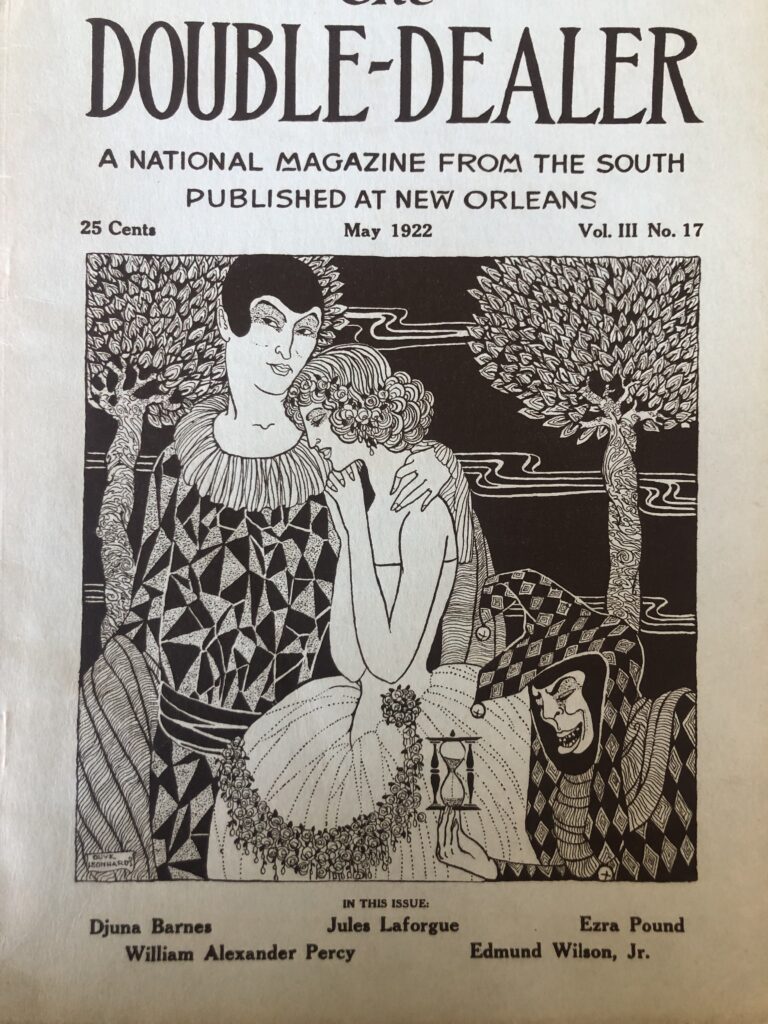
On our third lab day, I looked through The Double Dealer. What drew me to this magazine was the art on the front cover. It is a sort of ‘Art Nouveau’ style illustration (popular in 1890-1910). Done by Olive Leonhardt – an admired illustrator in New Orleans at the time – this decorative cover art is symbolic of the magazine’s regret to let go of decadent writing as the literary arts transitioned into modernism. The editor writes a nuanced note on modernism, appreciating some aspects, including, the novelty in theme, but, diminishing the ‘innovation’ in style as he saw the beauty in writing “mutilated beyond recognition” by a new movement
A few important quotes in the editorial note titled “Modern Ism” include:
“The revolutionists too often go down to their doom believing that the raw material will suffice. Charmed by the novelty of an emotion, they feel that to point at it or to name it is to produce a thing of beauty. But they deceive themselves.”
“However startling one’s theme, one is still faced with the bitter necessity of good writing”
“Men and women write of long-hidden desires, so-called new emotions and yearnings with an unusual frankness. They write in new forms. But as I read their books I feel a vague distress. I ask for beauty and they bring me a clinical report on emotions or sensations…I ask for wine and they bring me empty goblets in new shapes.”
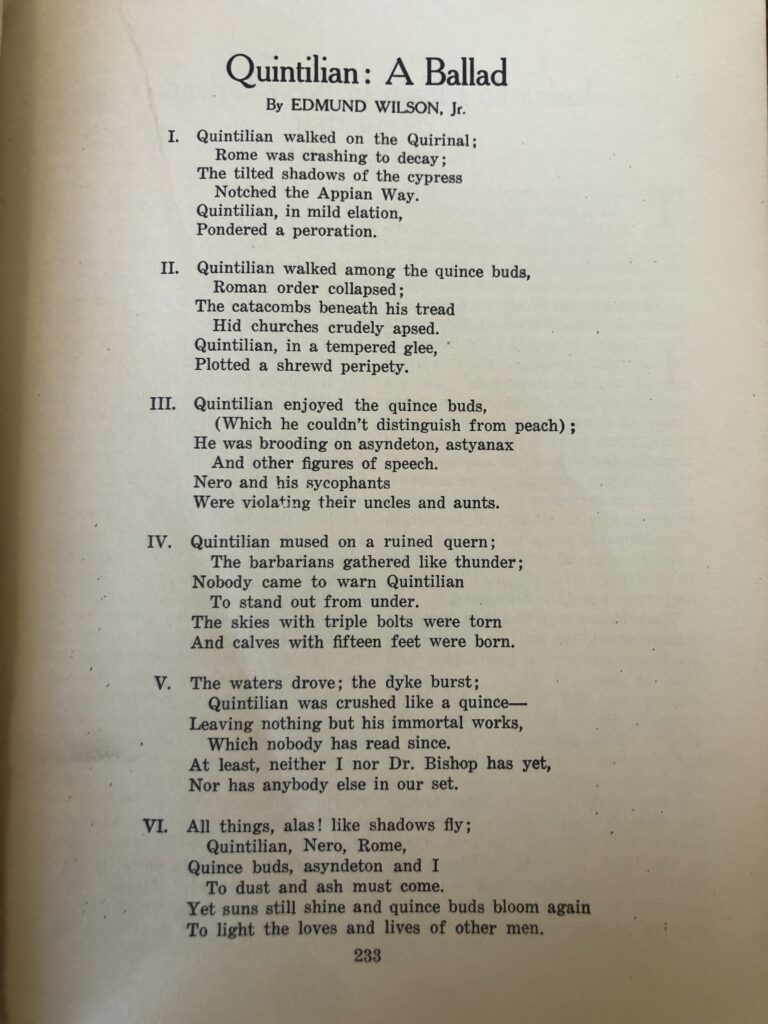
Notably, the Ballad “Quintillian” by Edmund Wilson Jr. comes directly after the editorial not. Marcus Fabius Quintilian was a Roman orator, writer, and rhetorician. Wilson writes Quintilian was “brooding on asyndeton, astyanax / And other figures of speech.” This feels very relevant to the editor’s critique of the modernist’s ‘innovative’ writing.
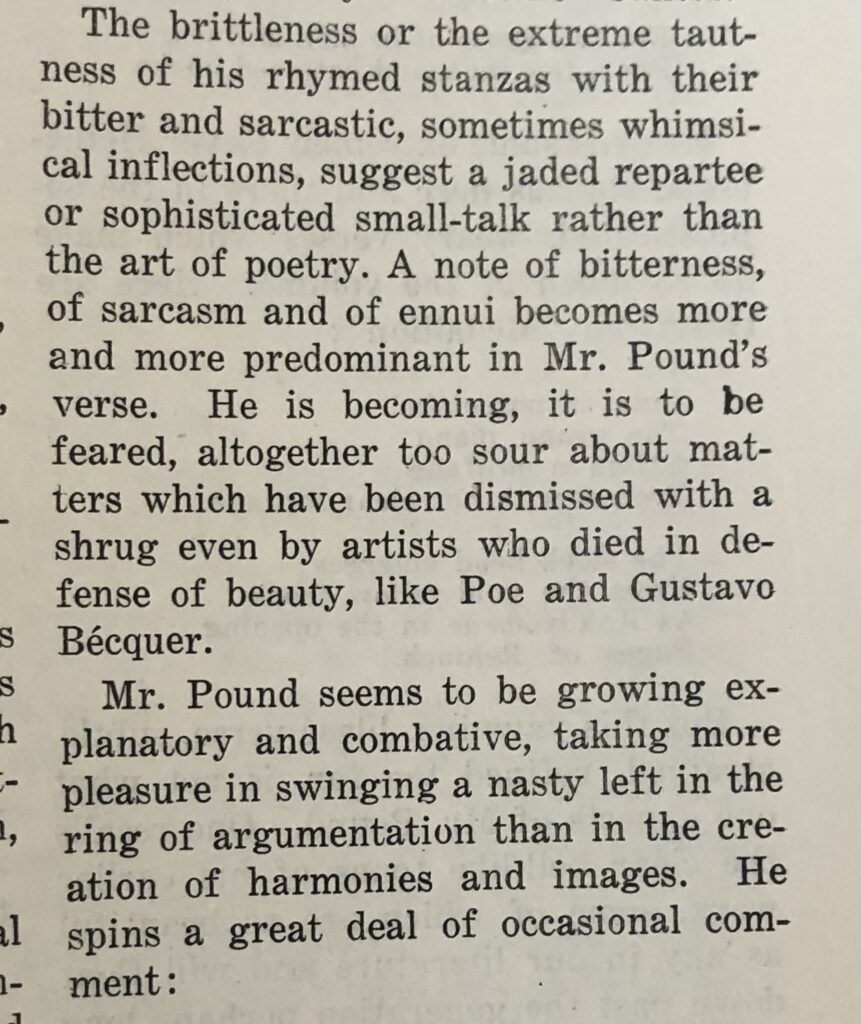
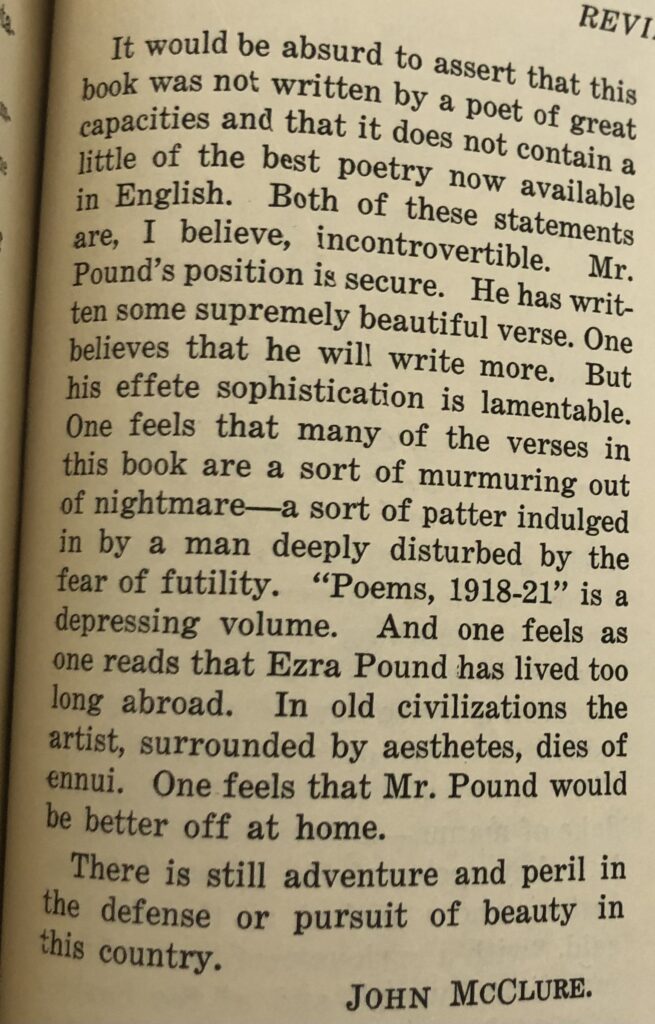
Pictured below, are two excerpts from a review of Ezra Pound. I found this to be very interesting because Pound was hugely influential to many later modernist writers as well as a friend/rival to William Carlos Williams. The reviewer writes “this yawning, blasè verse, subtle, strained, refined too far, is not what one expects of Mr. Pound.”
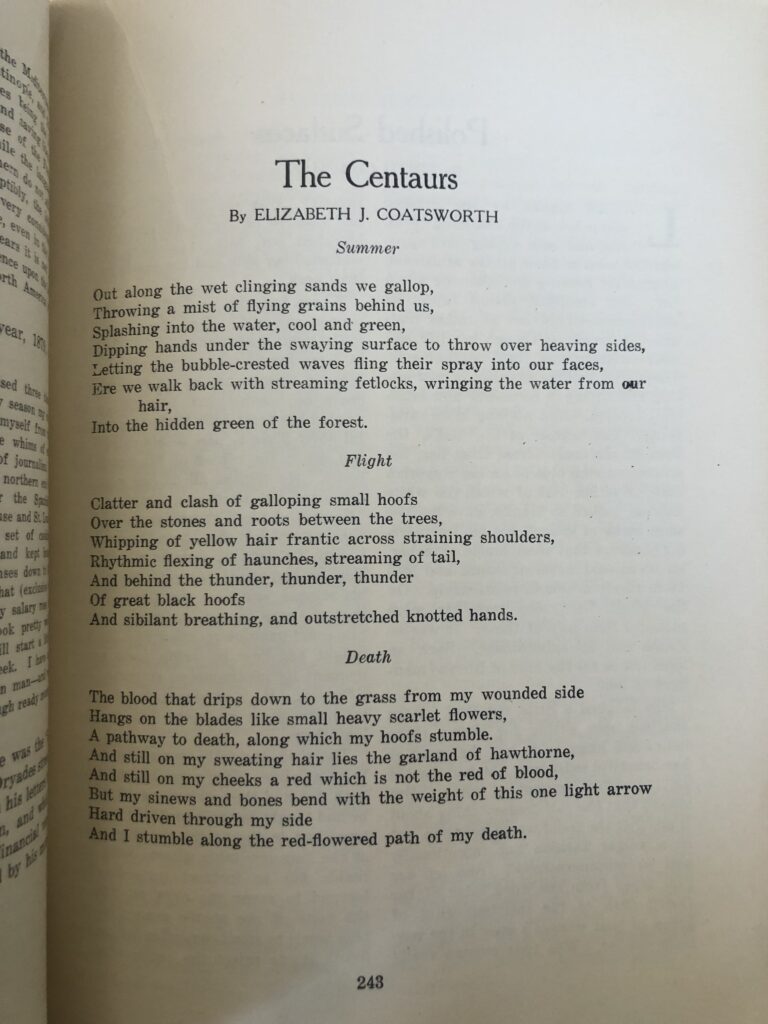
Lastly, I want to include the Poem “Centaurs” by Elizabeth J. Coatsworth because I enjoyed it so much and because it was the most ‘modern’ piece of poetry inside the magazine.
I’ve tried to fix the format to no avail … please forgive!
Excellent finds, Beth. There’s a lot of scholarship on the tensions between the decadent and aestheticist movements of the Victorian era and the supposedly “new” modernism. This is a fantastic example of that tension.